One beep test score tells you where you finished that day. A few scores, recorded the same way, can tell you more. The catch is that a score only compares fairly with another if the run was set up in a similar way. This guide covers what to write down and what to keep the same. It cannot promise your score will go up.
Record the same few things every time
After each run, note:
- the level and shuttle you reached (for example, level 7, shuttle 4)
- the date and time of day
- which audio you used
- the floor and whether the lane was measured
- how you felt: rested, tired, a bit ill
A line in a notebook is enough. The last item matters more than it looks, because it is often the reason a score moved. If you are unsure how to read the level and shuttle numbers, beep test levels explained covers them.
Keep the conditions the same
If the lane is different, the score is not comparable. A lane a metre short or a slippery floor can shift a result without any change in fitness. Measure the same 20 metres and run on the same surface where you can. How to set up a beep test has the checklist.
Use the same audio each time. Recordings can differ a little in timing, so a result from one is not an exact match for another. Write down which track you used; how beep test audio works explains where the differences come from.
Rule of thumb Same lane, same audio, similar time of day. If one of those changes, write it next to the score.
Space out the full tests
Running a full test every day tends to blur the picture, because tiredness can hide any change. Many people leave a few weeks between full tests and spend the time between them on easier training. Ideas for that are in how to improve your beep test score.
Read the results with care
Look at several results together instead of one. A dip after a poor night of sleep says little. A steady move over many weeks says more. Even then, a number is only one measure, and a better score is never guaranteed.
If you stop because you are not feeling well, write that down too, and talk to a doctor or qualified coach if it keeps happening.
Let the app keep the record
BeepRun counts shuttles and levels from the audio and saves your records, so you can review past runs without a notebook. It also shows an estimated VO2max and compares you with age and sex averages, but treat both as reference values, not a lab result. It cannot check whether your foot reached the line, so be honest about each turn.
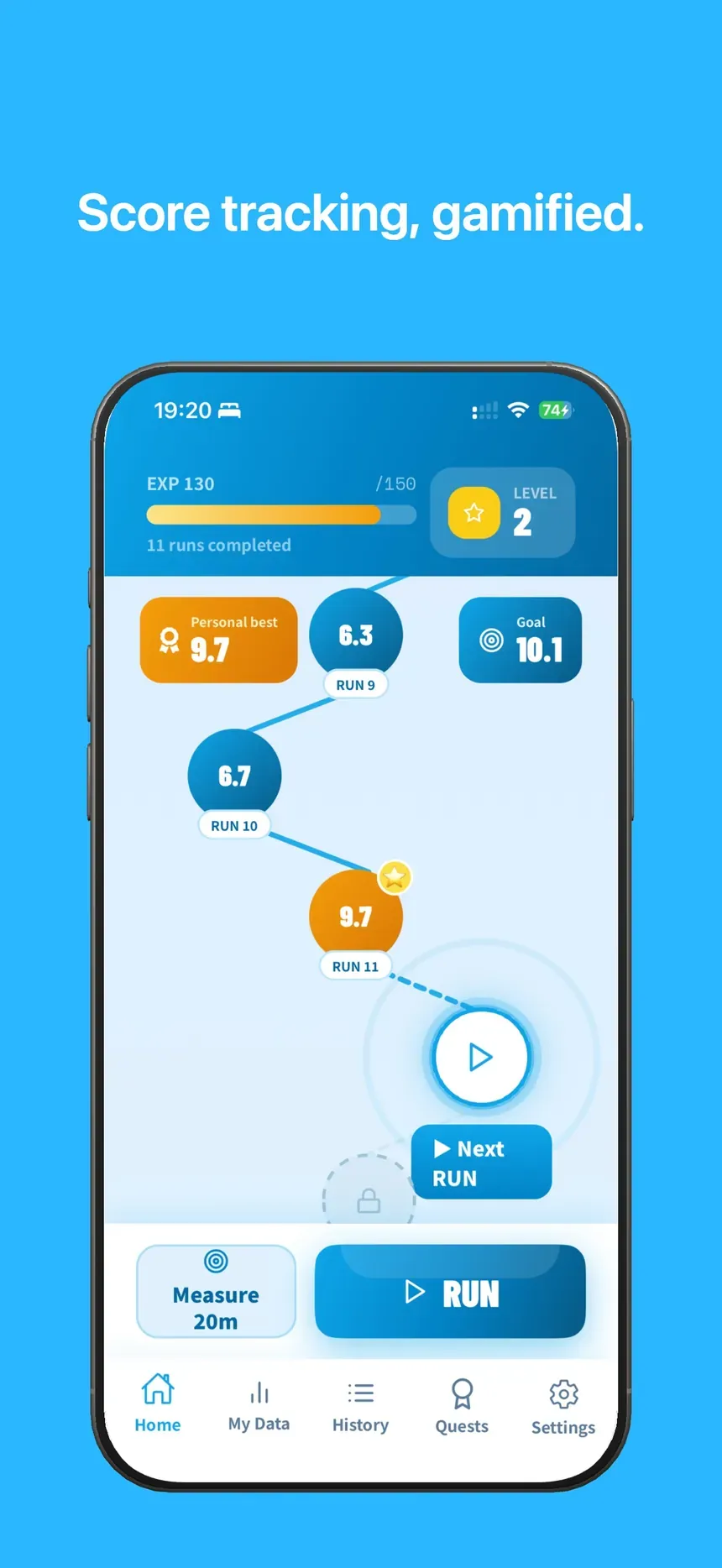 BeepRun keeps each run so you can compare them later. The screen shows sample data.
Quick answers
What should I write down after a beep test?
The level and shuttle you reached, the date, which audio you used, the floor, and how you felt. The last few details explain a good or bad day later.
How often should I test myself?
There is no set rule. Testing every day makes it hard to tell a real change from a tired day, so many people leave a gap of some weeks between full tests.
Why did my score go down?
Sleep, food, the floor, the lane length and the audio all play a part. A single lower score is not a verdict. Look at several results side by side.